
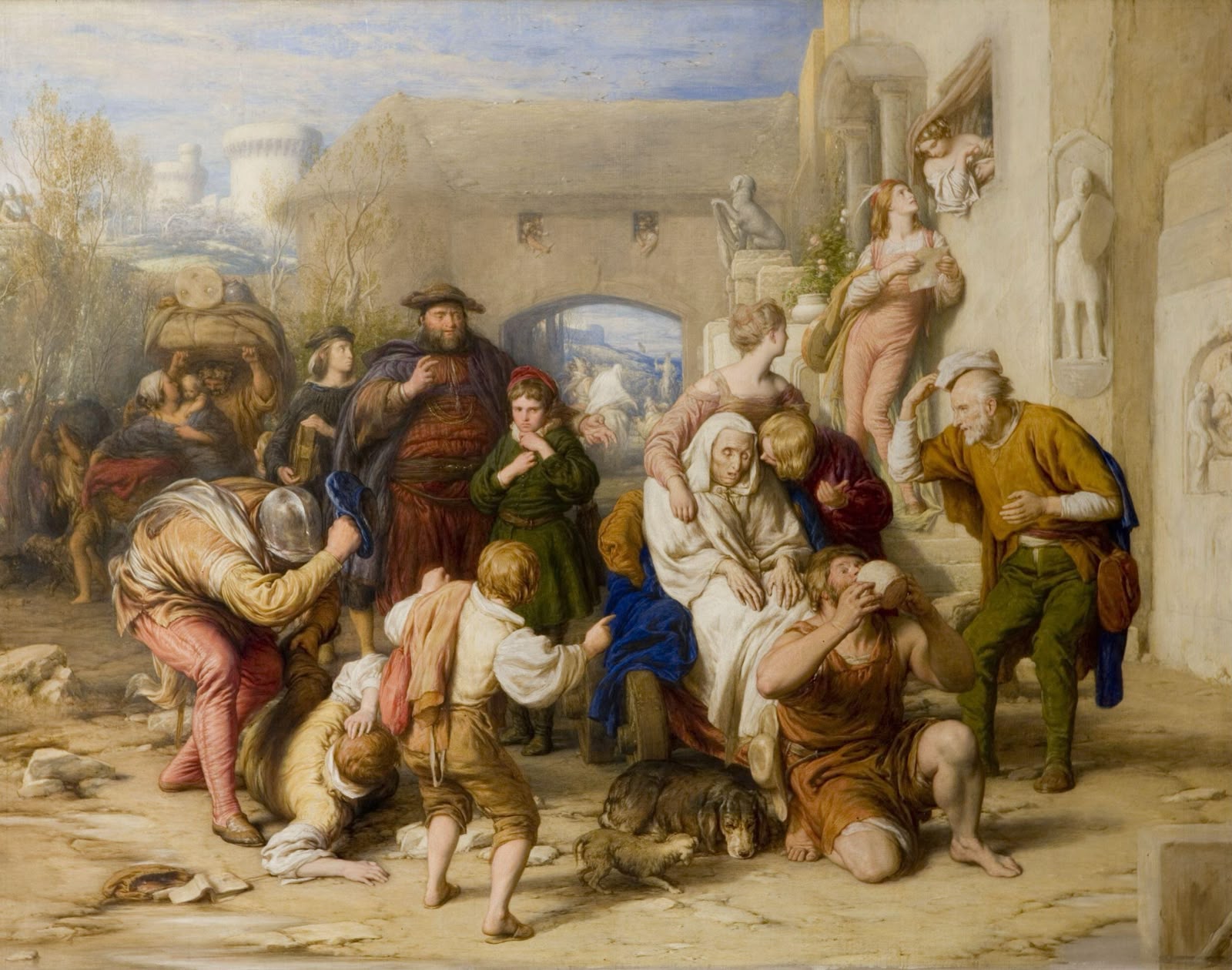
Studying the Humanities at university for 7 months now has made me realise two things:
1. Humanity — to be human — is so tragically beautiful.
2. The human is utterly abhorrent.
Shakespeare summarises this disdain for humanity quite well in his infamous monologue that everyone has heard at some point in their life, even if they’re not into Shakespeare:
“All the world’s a stage,
And all the men and women merely players;
They have their exits and their entrances…”
Now, to be very fair, whether one dislikes Shakespeare or not – is he not right?
As Erving Goffman theorised, we are basically all just actors, playing roles, wearing masks; student, friend, lover, brother, teacher, whatever it is. And so, this is what I mean – when I leave a lecture hall, I sometimes leave feeling hopeless, because one really does wonder: what’s the point? (This is of course, apart from the accumulated reading, extra reading, more reading, writing, and general studying to do for the exam in two days.)
It’s trying to understand the human and the world we have constructed with these invisible structures that oppress us, exploit us, divide us — trying to understand why, how we can allow it to happen while we know very well how it ruins others – other human beings.
But the Humanities has also taught me of the capacity for love of the human; in the captain who has to leave his family he loves so dearly to go to war, the lovers who are being separated because of immigrant policies, the insane love one has for her dark-skinned lover despite racism being rampant, the girl who sacrifices her love to look after her sickly brother — I could go on and on.
But it makes me wonder (many things) — if we are capable of loving so dearly — can we not love others in the same way? Can we not love the black man and the veiled woman, because at the end of the day, are they not human too, beyond the skin colour, beyond the veil?
Have we been given roles and parts to play to define who must be loathed and shunned out, and who must not be?
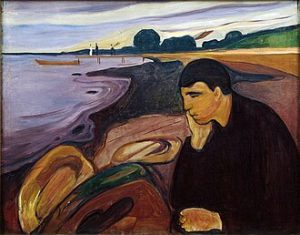
And so, there is a constant conflict between hopelessness and hope, the apathy of humanity and the unfathomable potential for love of the human being; the different sides of humanity and the overbearingly heavy existence of the human. It cannot be reduced or simplified to be understood so easily.
Now, where am I going with all this rambling, you wonder?
Well, what I am trying to say is: to understand the human and our life is a strenuous, winding task that makes one’s head spin, similar to, I suppose, you reading this right now, because where does one start and where does one end?
And what I am trying to say is: the world certainly does become gloomy and miserable and I
don’t intend on being overly saccharine and oversimplifying the situation (which definitely seems to be the case) but I do believe that if we could just recognise this ability of ours to feel so deeply, perhaps then, our existence would become a bit more bearable. If, maybe, we are able to look at it from a different lens.
And finally, what I am trying to say is: I believe that to love is rebellion, in a way – to love would be the first step to look beyond the rigidly assigned roles, and in search for new meaning.
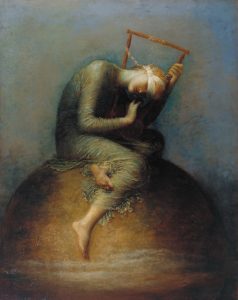
I realise I must sound like sweet little Paddington preaching to the world what his Aunt Lucy taught him: “If we’re kind and polite, the world will be right!”
Perhaps I am a brown little bear telling you that, but a little differently.
As human beings, it is true that the world we live in is constructed with structures unseen to the eye (yes, that is what Arts graduates do, break down and understand these systems – now you know!) and yes, it is true that we are capable of an immeasurable amount of emotion and goodness, and on the flip side, of evil too.
Which is why I am not saying that we should live in a bubble of cupcakes and rainbows and unicorns, turning a blind eye to the very real injustices around the world. To passively submit to our roles that teach us to hate, to divide, to exploit, to hurt is a betrayal of our humanity that should be treasured in a world, it seems to me, in which it is slowly and surely, fading away.
We need to do the opposite — we need to use this love, this emotion to create a new world that doesn’t fail our humanity. Even if it is in the smallest ways.
So yes, perhaps “all the world’s a stage,” but for those of you in theater — do the actors not, sometimes, go against the directions of the director?