

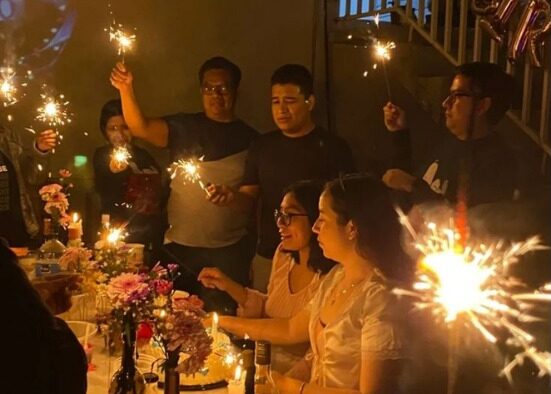
I don’t think we notice our parents getting older all at once. It happens in ridiculously ordinary moments.
One day my mom came to me with her phone. “Can you send this number to your aunt?” She showed me a phone number someone had sent her in an SMS. I looked at her. “Mom, just copy and paste it.”
“I know how to send a WhatsApp message,” she said. “But the number is in the normal messages. How do I send it from there?”
Such a small thing.
Another day she was walking around complaining, “Who made this phone so dark? I can’t see anything. Make it bright again.” My little brother had turned on dark mode. So I changed it back. And somewhere along the way, I realized I had become the person fixing her phone.
The font on her phone is huge too. I used to wonder why anyone would ever need letters that big. Now I know. Now it’s my mother’s phone.
Once she wanted to save some YouTube videos, and somehow she ended up sending a hundred YouTube links into a WhatsApp chat named mydocs. I don’t know who taught her to do so at all. But sometimes these little things stay in my head longer than they should.
They call you whenever technology goes wrong with complete confidence that somehow you’ll know. It doesn’t matter what the problem is WhatsApp, Google Maps, a QR code, or some random setting they definitely swear they didn’t touch. They just hand you the phone like, “Here. Fix it.”
And while you’re fixing one tiny thing, Mom is standing beside you saying, “Don’t change anything else on my phone!” because she’s convinced you’ll somehow make everything disappear. It’s funny, but there’s something strange about it too.
They taught you how to write. How to count money. How to cross the road. How to exist in the world. Now you’re teaching them how to scan a QR code, share a location, copy and paste something, and fill out an online form. The people who taught you how the world works are now sometimes asking you how this newer version of the world works.
And it’s not just technology.
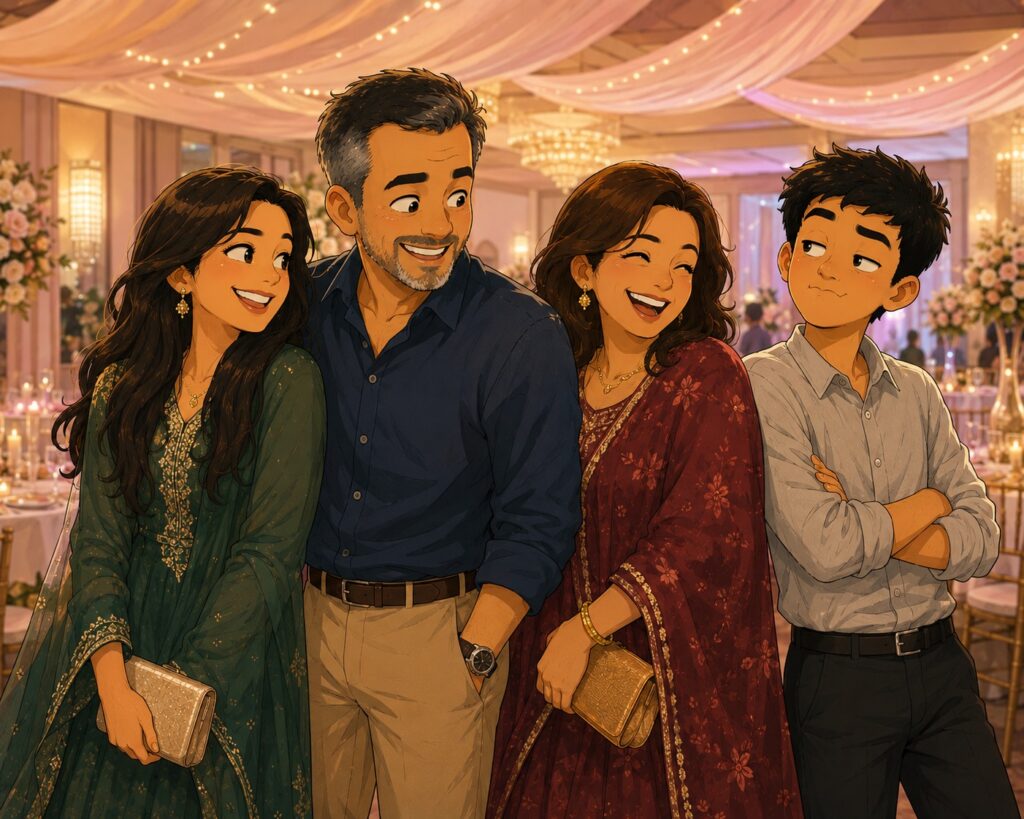
She’ll come to me and tell me something that happened at a family function. Then, just two days later, she’ll come back and tell me the exact same story. “Mom, you already told me this.” She’ll smile, almost embarrassed, and move on. And I move on too. Except sometimes I don’t even tell her that she’s repeating herself.
Sometimes I sit there thinking: Did she forget that she told me?
And then there’s Dad.
I notice him getting older in different ways. But somehow, I notice it most when I’m sitting behind him on his bike.
I’ve been riding with my dad for as long as I can remember. When I was small, I would sit behind him and hold onto him tightly because I thought I would fall. School. Tuition. Going somewhere nearby. Sometimes even now, university. Back then, my arms would be around him. Now I feel independent. I don’t hold him like that anymore. I just hold the bar behind the bike, or sometimes I don’t hold anything at all.
But when we’re stuck in traffic, when there’s nowhere to look but straight ahead, I end up staring at the back of his helmet. And underneath it, I can see his hair. I remember that hair being black. Now there is white mixed into it. More than before.
His hair is thinning too. His neck has gotten darker from years of being out in the sun. He’s still physically fit. He still works. He still goes everywhere. If you looked at him, you wouldn’t call him an old man. But the signs have started appearing. And somehow, sitting behind him on the same bike I’ve been sitting on since I was little, I notice them.
Maybe that’s what makes it hurt. The bike is the same. Dad is still sitting in front of me. I’m still sitting behind him. Nothing changed. And everything did.
There are other changes you don’t really want to notice. The number of medicines at home slowly increases. Something for sugar. Something for cholesterol. Something else that has to be taken regularly. No one really talks about it. A new medicine just appears every now and then. And before you realize it, the medicine shelf is a little fuller than it used to be.
We are just living. Going to university. Going out with friends. Sitting on our phones. Complaining about random things. And meanwhile, quietly, our parents are getting older.
Not old. That’s the strange part. They are still completely themselves. Mom is still Mom. Dad is still Dad. They still worry about us more than we worry about ourselves.
When I leave for university, my mom still stands near the door: “Did you take your food?” “Have you got enough money for the bus?” “Laptop charger?” I’m an adult now, but apparently I can never be trusted to remember my charger.
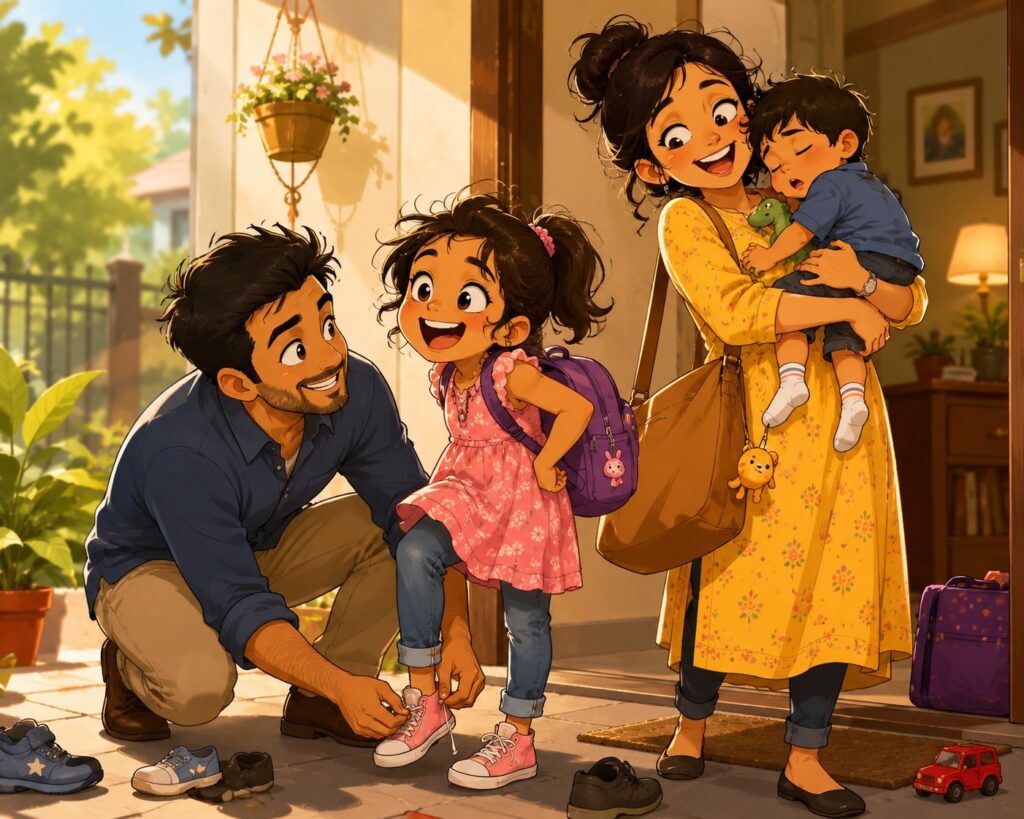
And maybe that’s another strange thing about growing up. When you’re little, your parents are the adults and you’re the child. That’s it. The roles seem permanent. Then you reach your twenties and something changes. They start giving you more freedom. They let you go out with friends without being as strict as they once were. You make your own decisions. Your conversations become different. Sometimes your parents even start feeling a little like your friends.
Family outings change too. When we were children, they planned everything. They packed everything. They remembered everything. They paid for everything. You just got into the vehicle. Now, slowly, you start saying, “I’ll drive.” “I’ll book it.” “I’ll carry that.” “I’ll pay.” And you don’t really notice when that change happens.
When I was little, if there were heavy bags, Dad automatically carried them. I didn’t even think about it. The heaviest thing simply belonged in his hand. Now sometimes I see him carrying something and automatically say, “Give it to me.” Somehow, without noticing, I became strong enough to carry things for the person who carried everything for me.
And slowly, something else has started happening too. Sometimes while I’m at university, Mom will message or call me: “When you come home, can you buy this?” And I do. If she wants to go to the salon, or wants to buy some little thing she likes, sometimes she’ll ask me for money now instead of Dad. I don’t know exactly when that started.
For most of my life, I was the one asking them. “Can I have money for this?” “Can you buy me that?” “Can I go here?” And Dad paid. Mom arranged it. They figured everything out. Now sometimes Mom asks me.
It’s such a tiny change that nobody would think much of it. But I do. Because somewhere inside those little requests, I can feel our relationship changing. Not reversing completely. Just shifting. And nobody announces that you’ve entered a new stage of life. It just happens.
And then there are the stories. As you get older, they start telling you things they never told you when you were a child. Stories from before you were born. What they were like when they were young. The places they went. The things they did for fun. What made them happy. What they wanted from life. They tell you about life before they had children and how much changed afterward.
And suddenly you realize something that should have been obvious all along: Mom and Dad had entire lives before they became Mom and Dad.
Sometimes I listen to those stories and almost feel upset for them. Why did you give up so much? Their time. Their money. Their freedom. Their plans. Maybe even versions of themselves they could have become. And yet, when they tell these stories, they don’t sound bitter. They don’t seem to regret it.
That’s the part I couldn’t understand at first. Because I’m looking at everything they gave up. But to them, none of it feels like something they lost.
I see the sacrifice. They see the life they built around us.
To me, it looks like they gave us pieces of their lives. To them, perhaps, loving us was simply part of the life they wanted to live.
My parents aren’t the type to constantly hug us or say “I love you.” Their love looks different. It looks like somebody asking whether I ate. It looks like being told to take an umbrella when the sky has one suspicious-looking cloud. It looks like sacrifices they don’t even call sacrifices. And maybe I understand that language better now.
That’s the part that gets me. They’ll give something up for us and then talk about it with a happy face, as though they lost absolutely nothing.
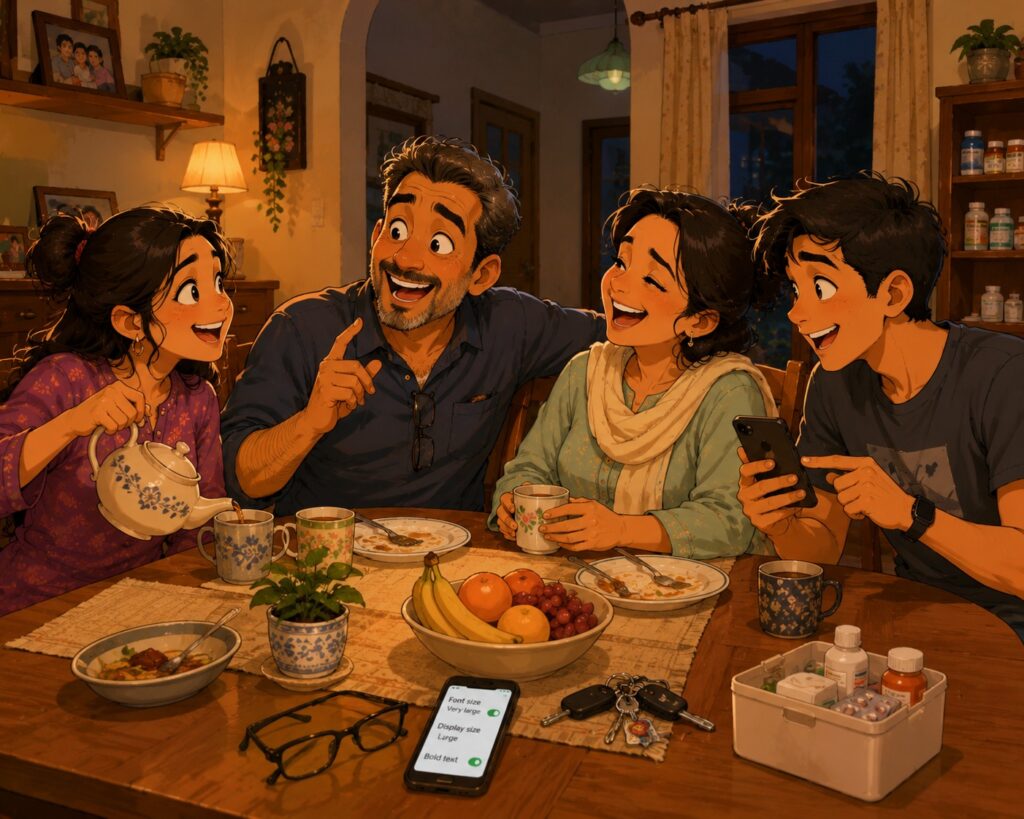
When I was younger, sometimes I wanted to escape the boring family conversations. Now I find myself just sitting around after dinner. Asking what happened during their day. Showing Mom something funny on my phone. Hearing the same advice Dad gives me a hundred times. Nothing important is happening. And maybe that’s exactly why it feels important now.
Because while I was busy growing up, they were growing older too. And somehow, I only just noticed.
For most of my childhood, I thought time was happening only to me.
I’m 10… I’m 15.
I finished school.
I started university.
I’m 20.
Look how much I’ve grown. Look how independent I’ve become. Look at everything that’s changing in my life.
I forgot that every birthday I celebrated was another year in their lives too.
No Responses